



The Dermal-Epidermal Junction: What It Is, Why It Matters, and How Skincare Can Support It
When people mention “skin firmness,” “bounce,” or “that smooth, glassy look,” they’re really talking about how well the skin’s layers work together and stay locked in place. This relationship is decided at a razor-thin but vital meeting point called the dermal-epidermal junction—the DEJ. Get to know the DEJ, and you’ll understand why some skin naturally looks bright and resilient, while other skin seems thin, loose, or rough despite all the moisturizer in the world.
Let’s understand what the DEJ is, how it works, how it changes with age and sun exposure, and why it’s an essential focus for modern skincare.
Ready to Learn all the Details on the Dermal-Epidermal Junction? Get Nerdy Here!
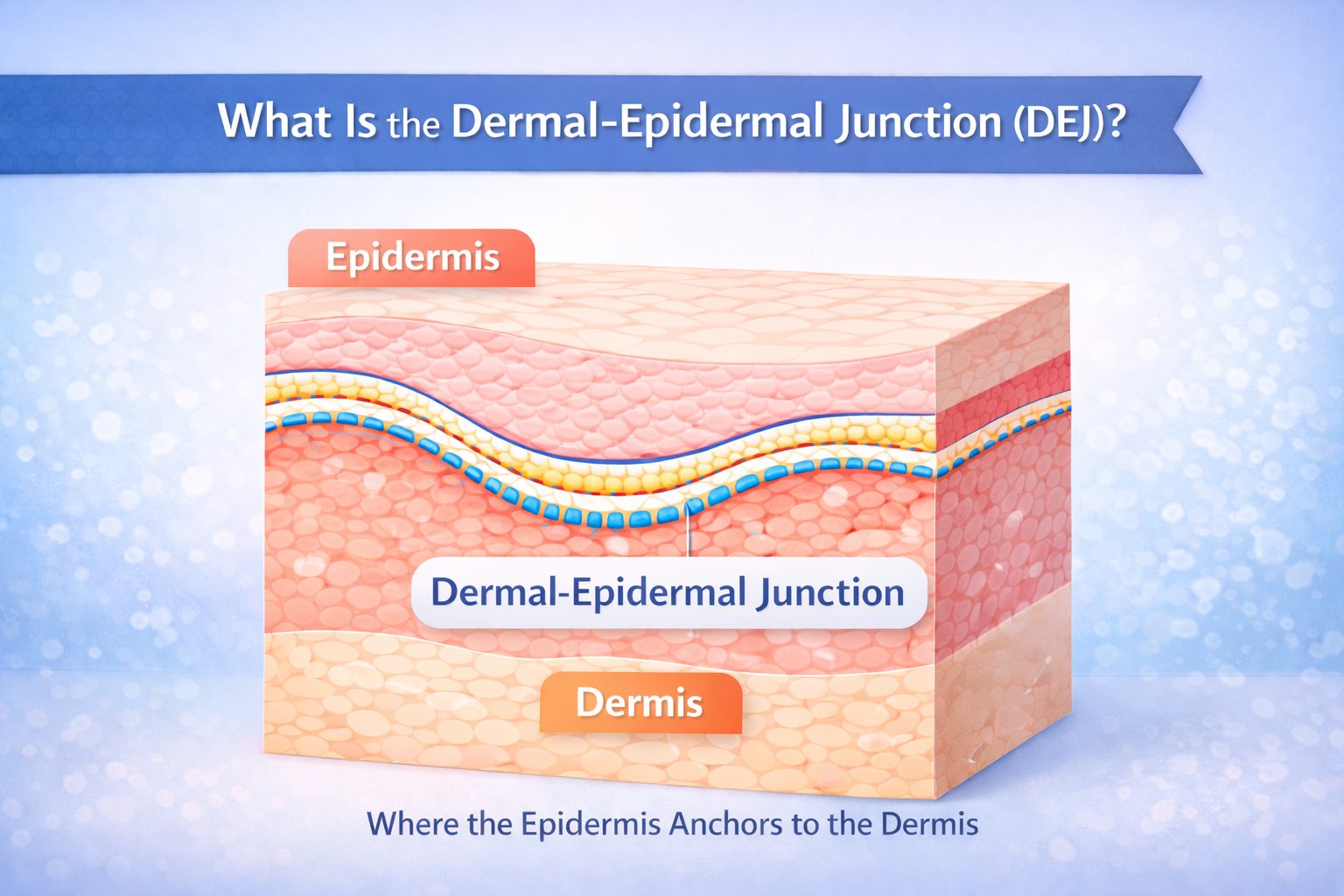
What Is the Dermal-Epidermal Junction (DEJ)?
The Dermal-Epidermal Junction (DEJ) is the microscopic “border zone” where the epidermis—the outer layer of your skin—meets the dermis, which lies beneath and contains collagen, elastin, blood vessels, and a variety of support cells. Imagine it as the skin’s structural handshake: a specialized interface that firmly anchors the epidermis to the dermis while enabling ongoing biochemical communication between the two layers.
The DEJ isn’t just a straight line. In young, healthy skin, it’s wavy—like rolling hills and valleys—which means more surface area and a tighter grip between layers. That’s a big reason why younger skin feels firmer and bounces back easily.
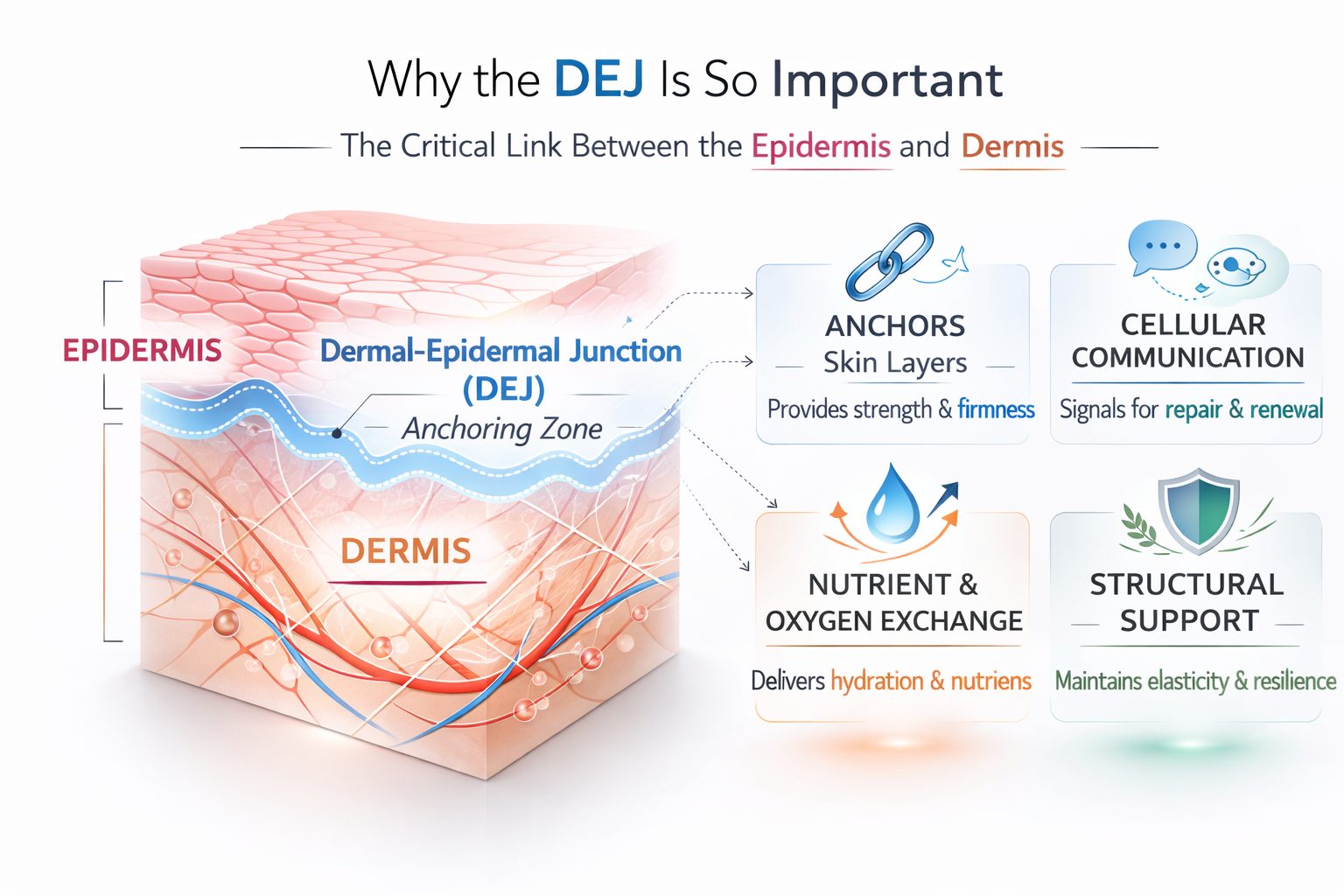
Why the DEJ Is So Important
The DEJ may be tiny, but it’s a heavy hitter. Here’s what it does for your skin:
1) It anchors the epidermis to the dermis
The DEJ is like double-sided tape for your skin—holding the outer and inner layers together with specialized proteins. When this bond is strong, your skin looks and feels firm. If it loosens, you start to notice sagging, fine lines, and a crepey look, especially around delicate spots like your eyes and neck.
2) It acts as a communication hub
Your skin’s top and bottom layers are always chatting, sending out signals that affect things like:
- collagen and elastin production
- barrier function and hydration
- inflammation and repair
- pigmentation behavior
If your DEJ is in good shape, your skin acts younger and stays in sync.
3) It improves nutrient and oxygen exchange
The outer layer of your skin doesn’t get blood directly—it depends on the dermis for oxygen and nutrients. Thanks to the DEJ’s wavy shape, there’s more surface area for this exchange, which helps your skin look bright, even-toned, and full of life.
4) It helps the skin resist mechanical stress
Daily facial movement, rubbing, cleansing, shaving, and environmental exposure all subject your skin to constant micro-stress. A strong DEJ helps skin withstand this stress, preventing breakdown into roughness, sensitivity, or chronic irritation.
What Happens to the Dermal-Epidermal Junction as We Age?
One of the most under-discussed drivers of visible aging is that the DEJ gradually becomes flatter and less interlocked. One big reason skin ages? The DEJ flattens out and loses its “Velcro” grip over time.
Here’s what starts to happen:
- The DEJ flattens out—meaning less surface area and a weaker hold between layers.
- Your skin makes fewer “building block” proteins, so the layers don’t stick together as well.
- Skin doesn’t renew itself as quickly, so you get more dullness and rough patches.
- Nutrients can’t get where they need to go as easily, so skin looks less vibrant and becomes more delicate.
- Skin is more likely to wrinkle or look crepey, especially in thinner areas.
What accelerates DEJ decline and skin aging?
- Too much sun (especially without protection)
- Environmental stress and pollution
- Inflammation (like from harsh products or scrubbing too much)
- Hormone changes (since they affect your skin’s ability to repair and stay firm)
That’s why your skin might look older even if you moisturize—it’s not just about hydration. The real action is happening deeper down, at the DEJ.
Why Targeting the DEJ Is a Big Deal in Skincare
Most skincare messaging talks about collagen in the dermis or the barrier in the epidermis, but the dermal-epidermal junction (DEJ) is the crucial bridge between them. When you support the DEJ, you help the skin’s deeper structure and visible surface work together, leading to improvements like:
- firmer-looking skin (better “snap” and less laxity appearance)
- smoother texture (less crepey or papery look)
- improved radiance (better diffusion and healthier epidermal behavior)
- more even tone (because inflammation and signaling influence pigment pathways)
- greater resilience (skin looks less easily stressed)
Put simply, caring for the DEJ can help skin look noticeably healthier, not just cosmetically improved.
Can Skincare Products Really Reach the Dermal-Epidermal Junction?
For skincare to work on deeper layers, it first needs to get past the skin’s outer barrier. Not all products can do this, and some are much better than others at delivering ingredients where they’re needed.
That said, skincare can still support the DEJ in practical ways through:
- strengthening the epidermal barrier (reducing inflammatory stress that degrades DEJ components)
- supporting healthier epidermal behavior (turnover and differentiation)
- supporting dermal matrix health (collagen-supporting signaling and antioxidant protection)
- using well-designed delivery systems that improve stability and bioavailability of actives
A product doesn’t have to reach the DEJ directly to make a difference. By lowering inflammation and protecting against stress, you’re helping preserve the DEJ’s strength over time.
Ingredients and Strategies Commonly Used to Support DEJ Health
Brands that say their products support the DEJ usually combine several approaches. Here’s what you’ll often see:
Retinoids and retinoid alternatives
Retinoids support renewal pathways and can improve the look of fine lines and texture over time—partly by influencing dermal-epidermal signaling and structural support.
Antioxidants
Vitamin C, vitamin E, ferulic acid, and other antioxidants help reduce oxidative stress that contributes to structural breakdown—especially from UV and pollution.
Peptides and growth-factor-inspired technologies
Peptides can act as signaling molecules. Some formulas aim to enhance the appearance of firmness and elasticity by promoting healthier skin communication and matrix function.
Barrier-repair lipids
Ceramides, cholesterol, and fatty acids reduce ongoing irritation and stress signals that can indirectly undermine deeper structures.
Sunscreen
If there’s one “DEJ protection product category,” it’s daily broad-spectrum sunscreen. UV damage is one of the fastest ways to erode skin architecture across layers, including the DEJ zone.
What are some products that address The Dermal-Epidermal Junction for better-looking skin?
Here are three standout options—each supporting the Dermal-Epidermal Junction (DEJ) either directly (by design) or by enhancing the skin’s natural processes and structural integrity to help keep the DEJ resilient and visibly youthful.
1) Revision D·E·J Daily Boosting Serum
Revision developed this formula with a focus on the Dermal-Epidermal Junction, aiming to help skin perform more optimally by enhancing cellular energy (ATP) with its sunflower sprout–based technology.
Why this matters for the DEJ: The DEJ acts as a communication and anchoring zone between the epidermis and dermis. When cellular function and signaling are optimized, the skin can better maintain the strong connection
and smooth surface appearance typical of a healthy DEJ—showing firmness, refined texture, and bounce.
2) Skinbetter Science InterFuse Intensive Treatment LINES
This targeted line-filling and support treatment features injectable-grade hyaluronic acid and a collagen-supporting blend of amino acids, peptides, and vitamin C, formulated to visibly soften expression
lines.
Why this matters for the DEJ: While not marketed specifically for the DEJ, this product helps support a stronger junction by boosting hydration and matrix-support signals—key factors in how smoothly the epidermis lays over the dermis,
where changes in the DEJ often appear as crepiness, etched lines, and reduced elasticity.
3) SkinMedica HA5® Hydra Collagen Hydrator (with Vegan Collagen)
This is a long-lasting hydrator (up to 48 hours) with VITISENSE® technology, featuring barrier- and hydration-supporting highlights like avocado oil esters and vitamin F.
Why this matters for the DEJ: The DEJ is compromised by chronic stress and dehydration. Improving barrier strength and moisture retention helps reduce daily micro-inflammation and friction, minimizing the visible signs linked with
DEJ flattening—such as rough texture, fine lines, and loss of plumpness.
What to Look for in a DEJ-Focused Skincare Routine
If you want skincare that supports The Dermal-Epidermal Junction, think in systems—not single miracles.
Daily essentials
- Broad-spectrum sunscreen every morning
- Gentle cleansing (avoid over-stripping)
- Barrier-support moisturizer (especially if using actives)
High-impact actives (introduce gradually)
- Retinoid at night (or a gentler alternative if sensitive)
- Antioxidant serum in the morning
- Targeted peptides or advanced “firming” serums consistently
Avoid the DEJ enemies
- over-exfoliation (too many acids, too frequently)
- harsh scrubs or aggressive cleansing
- inconsistent sunscreen use
- “cycling” too many strong actives without recovery nights
Consistency beats intensity. The DEJ is structural; structural change is slow.
FAQ: The Dermal-Epidermal Junction
Is the DEJ the same thing as collagen?
No. Collagen is mostly found in the dermis. The DEJ is like a handshake between the upper and lower layers of your skin—collagen helps, but the DEJ is the actual connection point.
Why does skin get crepey if it’s hydrated?
Hydration makes skin look plumper on the surface, but crepiness is often a sign that the deeper structure and the connection between skin layers have weakened. That’s where the DEJ comes in.
Can I “rebuild” the DEJ?
You can’t rebuild the DEJ overnight, but you can help keep it strong with things like sunscreen, retinoids, antioxidants, and good barrier care. Over time, this helps skin look firmer and healthier.
When should I start caring about the DEJ?
Probably sooner than you think. Sun damage and inflammation can affect the DEJ long before you notice any changes, so prevention—especially with sunscreen—is much easier than trying to fix problems later.
Bottom Line
The dermal-epidermal junction (DEJ) is one of the skin’s most important—but most overlooked—features. It’s where firmness, smoothness, and glow really start. If the DEJ is strong, your skin’s top and bottom layers stay connected and work well together. If it weakens, skin can end up looking thinner, looser, and less radiant.
Supporting the DEJ isn’t about one miracle ingredient. It’s about a smart routine: protect with sunscreen, repair your skin barrier, and use active ingredients consistently. This keeps the connection between skin layers strong for the long run.