


Best Supplements for Stress Relief and Anxiety Management

TL;DR: Effective stress and anxiety management combines lifestyle strategies—like exercise, sleep, and mindfulness—with targeted nutritional support. Key supplements such as L-theanine, magnesium, ashwagandha, and omega-3 fatty acids can play a meaningful complementary role when used alongside healthy daily habits.
Stress is one of the most common health complaints among adults today. Whether it’s back-to-back work demands, financial pressure, or the relentless pull of a busy life, chronic stress doesn’t just wear you down mentally—it takes a measurable toll on your body, too. According to the National Institute of Mental Health (NIMH), about a third of U.S. adults experience an anxiety disorder at some point in their lives, making it one of the most widespread health concerns in the country.
The good news? There’s a lot you can do. Managing stress and anxiety effectively doesn’t require a single magic solution—it requires a thoughtful, layered approach that addresses your body and mind together. This guide covers the most practical, evidence-based strategies for anxiety and stress management, including lifestyle habits, nutrition, and supplements that can work alongside them.
Understanding Stress and Anxiety: What’s Actually Happening?
Before exploring solutions, it helps to understand what you’re dealing with. Stress is your body’s natural response to perceived threats or demands. When triggered, your body releases cortisol—often called the “stress hormone”—which prepares you for action. In short bursts, this is useful. Over time, however, consistently elevated cortisol levels can contribute to:
- Disrupted sleep and fatigue
- Weight gain and stress-related eating
- Weakened immune function
- Increased inflammation
- Low mood and emotional irritability
It’s also worth knowing the difference between everyday stress and clinical anxiety. Occasional stress is a normal part of life. Clinical anxiety disorders, by contrast, are persistent conditions that can interfere significantly with daily functioning. According to the NIMH, anxiety disorders are among the most common mental health conditions in the U.S. If you suspect you have a clinical anxiety disorder, please speak with a qualified healthcare provider—supplements and lifestyle strategies are not a substitute for professional diagnosis and care.
The Foundation: Lifestyle Strategies That Actually Work

The most effective approach to managing stress and anxiety starts with daily habits. No supplement can replace these fundamentals.
1. Regular Physical Activity
Exercise is one of the most powerful tools for reducing stress and anxiety. Even moderate movement—a 20-minute walk, a yoga session, or a bike ride—can meaningfully lower cortisol levels and boost mood-supporting neurotransmitters like serotonin and endorphins. The National Center for Complementary and Integrative Health (NCCIH) recognizes physical activity as one of the most consistently supported lifestyle interventions for stress management.
2. Quality Sleep
Stress and poor sleep form a frustrating loop: stress makes sleep harder, and poor sleep makes stress worse. Prioritizing 7–9 hours of quality sleep each night gives your nervous system the recovery time it needs. Keeping a consistent sleep schedule, limiting screen time before bed, and creating a calm evening routine can all help break this cycle.
3. Mindfulness and Relaxation Practices
Meditation, deep breathing, and mindfulness-based stress reduction (MBSR) have well-documented benefits for anxiety. Even short daily sessions—10 to 15 minutes—have been shown in research to reduce perceived stress and improve emotional regulation over time. Apps, guided audio, and simple breathing exercises can all serve as accessible entry points.
4. Social Connection
Isolation amplifies stress. Staying connected with friends, family, or a support community can provide meaningful emotional relief, perspective, and resilience during difficult periods.
5. Limiting Stimulants and Alcohol
Caffeine and alcohol can both exacerbate anxiety symptoms, even when they seem like they’re helping in the moment. Reducing intake—especially in the afternoon and evening—can make a noticeable difference in overall stress levels and sleep quality.
The Role of Nutrition in Stress and Anxiety Management
What you eat directly influences how your nervous system functions. A diet rich in whole foods, lean proteins, leafy greens, and healthy fats provides the building blocks your brain needs to regulate mood and manage stress. Conversely, ultra-processed foods, excess sugar, and nutrient deficiencies can worsen anxiety symptoms.
Certain nutrients are particularly important for stress resilience:
- Magnesium plays a role in over 300 enzymatic reactions, including those that regulate the nervous system. Many adults don’t get enough through diet alone, and low magnesium is associated with heightened anxiety and poor stress tolerance. Getting adequate magnesium through food sources like leafy greens, nuts, seeds, and legumes is ideal—but a high-quality supplement can help fill the gap for those who fall short.
- B vitamins support nervous system function and energy metabolism—both of which are affected by chronic stress.
- Omega-3 fatty acids (particularly EPA and DHA, found in fatty fish and quality fish oil supplements) support brain health and emotional regulation. Research suggests omega-3 supplementation may help reduce anxiety symptoms over time.
Supplements That Can Support a Healthy Stress Response

Supplements are not a replacement for lifestyle habits or medical care—but for many people, they can be a valuable complementary tool. Here’s a look at some of the most well-studied options:
L-Theanine
An amino acid found naturally in green tea, L-theanine promotes relaxation without causing drowsiness. It works by increasing alpha brain wave activity—the mental state associated with calm, focused attention. It’s one of the most practical daytime supplements for stress and mild anxiety, particularly for people who feel mentally “on edge” without a clear reason.
Relora®
Relora® is a patented botanical blend of magnolia (Magnolia officinalis) and phellodendron (Phellodendron amurense) bark extracts. It has been specifically studied for its role in supporting a healthy cortisol response. It may also help with stress-related food cravings—a common but often overlooked symptom of chronic stress.
Magnesium
For those who don’t get adequate magnesium through food, a quality magnesium supplement can support nervous system regulation and improve both stress tolerance and sleep quality. Magnesium glycinate and magnesium bisglycinate are two of the most bioavailable forms—both are gentle on the stomach and well-suited for daily use. Look for supplements free of common allergens and unnecessary additives to get the most out of your magnesium routine.
Ashwagandha
Ashwagandha is one of the most researched adaptogens—a class of herbs that help the body adapt to stress. It works by modulating the hypothalamic-pituitary-adrenal (HPA) axis, which governs cortisol release. The NCCIH notes that some ashwagandha preparations may be effective for stress and sleep, though evidence on anxiety specifically is still emerging. Regular use over several weeks is generally needed before noticeable benefits appear. When choosing an ashwagandha supplement, look for standardized extracts—such as Sensoril® or KSM-66®—which have been used in clinical research and offer more consistent potency than generic root powders.
Omega-3 Fatty Acids
EPA and DHA support brain structure and function, and research has linked omega-3 supplementation to improved mood and reduced anxiety symptoms. These are particularly useful as a long-term foundational supplement rather than a fast-acting option. Fatty fish like salmon, mackerel, and sardines are among the richest dietary sources, while high-quality fish oil or algae-based supplements can help fill the gap for those who don’t eat fish regularly.
How to Choose the Right Approach for You
Everyone experiences stress differently so that the right strategy will look different from person to person. A few guidelines to help you get started:
Match your strategy to your symptoms. If mental tension and restlessness are your main challenges, L-theanine or mindfulness practices may be the most direct starting point. If cortisol imbalance or stress-related eating are key concerns, a formula containing Relora® may be more appropriate. For long-term resilience building, adaptogens like ashwagandha and omega-3s can serve as effective foundational additions.
Layer your strategies. The most effective approach combines lifestyle changes with nutritional support. Supplements tend to work best when your sleep, exercise, and nutrition are also being addressed.
Give it time. Some strategies—like ashwagandha, omega-3s, and mindfulness practice—build their benefits gradually over weeks of consistent use. Don’t judge effectiveness too quickly.
Consult a healthcare provider. This is especially important if you’re managing a diagnosed anxiety disorder, taking prescription medications, pregnant, or nursing. A qualified provider can help you identify the safest and most targeted approach for your specific situation.
Supplement Options to Explore
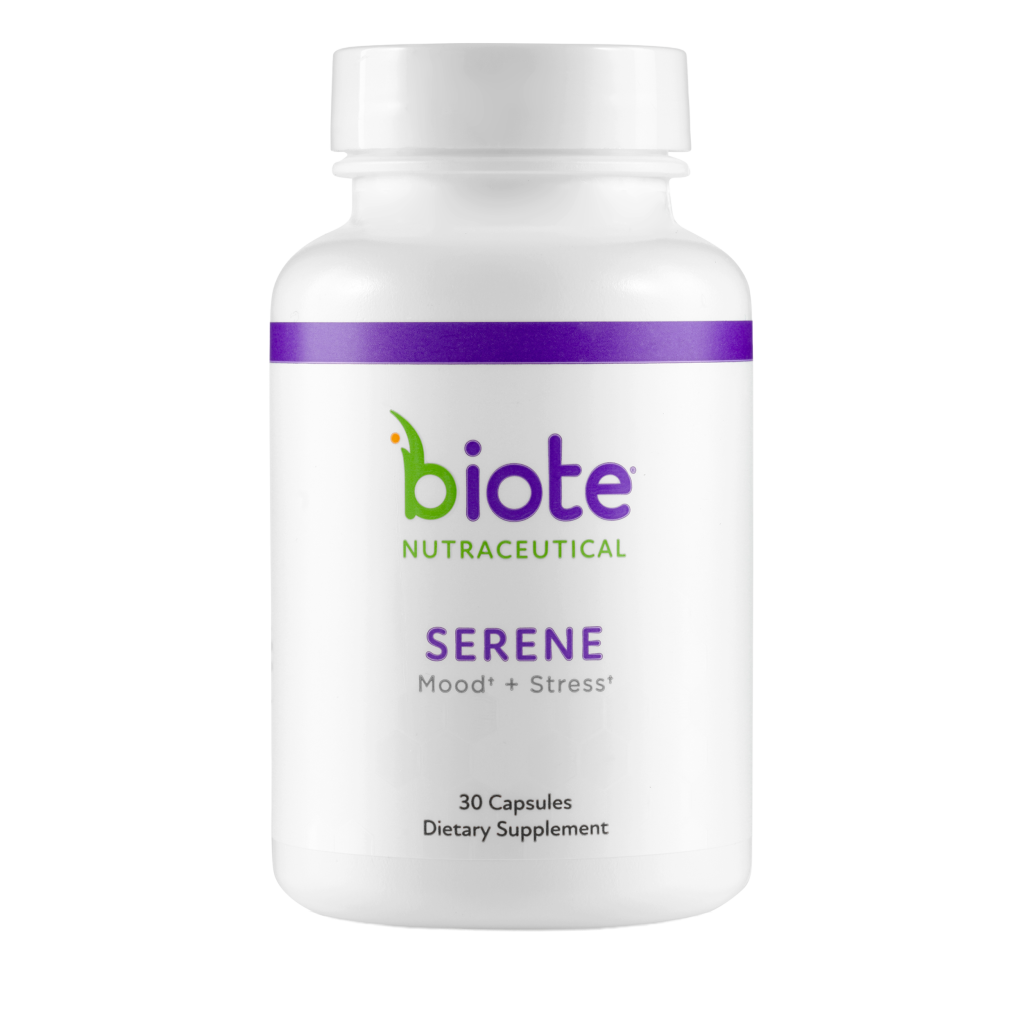
For those who prefer a supplement that combines more than one of these ingredients, Biote Serene is one option to consider. It pairs L-theanine and Relora® in a single, clean-label formula. Both ingredients are discussed above in the context of cortisol support and calm mental focus. The formula is designed to be taken as needed rather than on a fixed daily schedule, and effects are generally reported within a few hours. It is made with all-natural, vegan ingredients and is free from soy, dairy, and gluten. As with any supplement, check with your healthcare provider before starting, particularly if you take prescription medications or have an underlying health condition.
For a broader look at supplemental options across sleep, hormone balance, and general wellness, the Biote supplements category at Cunningham Clinic includes several other formulas that may be relevant depending on your needs.
Bringing It All Together
Anxiety and stress are complex—they don’t yield to a single fix. But the right combination of consistent lifestyle habits, good nutrition, and targeted supplementation can make a meaningful difference in how you feel day to day.
Start with the foundations: move your body regularly, protect your sleep, eat well, and make space for rest and connection. Layer in supplemental support where it makes sense for your symptoms and goals. And when in doubt, work with a healthcare provider who can help you build a plan tailored to your needs.
Managing stress is a practice, not a destination. Small, consistent steps tend to lead to the most lasting results. To learn more, visit Cunningham Clinic and call to schedule a consultation.
The information in this post is intended for educational purposes only and does not constitute medical advice. Supplements are not intended to diagnose, treat, cure, or prevent any disease. Always consult a qualified healthcare provider before beginning any new supplement or wellness regimen, particularly if you have a medical condition or take prescription medications.
Frequently Asked Questions
What is the most effective way to manage stress and anxiety?
The most effective approach combines lifestyle strategies—regular exercise, quality sleep, and mindfulness—with nutritional support. Supplements like L-theanine, magnesium, ashwagandha, and omega-3 fatty acids can play a helpful complementary role. For persistent or severe anxiety, professional medical care is essential.
What are the best supplements to support a healthy stress response?
Well-studied options include L-theanine, Relora®, magnesium, ashwagandha, and omega-3 fatty acids. Each works through a different mechanism, so the best choice depends on your specific symptoms. L-theanine and Relora® are often used together because they complement each other—L-theanine supports calm mental focus, while Relora® targets cortisol balance and stress-related cravings. Ashwagandha takes a broader adaptogenic approach, helping the body build resilience to stress over time. Magnesium and omega-3s work best as foundational, long-term additions that support overall nervous system health.
How long does it take for stress management strategies to work?
It varies. Some supplements like L-theanine and Relora® are fast-acting, with effects felt within hours. Adaptogens like ashwagandha typically require several weeks of consistent use. Lifestyle changes like regular exercise and improved sleep also take time to produce noticeable, lasting results—but the compounding effect is worth it.
Can supplements replace therapy or medical treatment for anxiety?
No. Supplements and lifestyle strategies can support a healthy stress response and help manage mild symptoms, but they are not a substitute for professional diagnosis or treatment of clinical anxiety disorders. If you’re struggling with persistent or severe anxiety, please speak with a qualified healthcare provider.
Are stress supplements safe for daily use?
Most well-formulated, natural stress supplements are considered safe for daily use in healthy adults. However, it’s always wise to follow recommended dosages and consult a healthcare provider—especially if you have any underlying health conditions, take prescription medications, or are pregnant or nursing.


Comments are closed