


The Complete Guide to Creatine Benefits

Quick answer: Creatine monohydrate is one of the most researched and trusted supplements in sports nutrition. It supports muscle performance, cellular energy production, and cognitive function—making it a valuable addition to the routines of athletes, active adults, and aging individuals alike.
Creatine has earned its place as a staple supplement for good reason. Once considered a niche product for bodybuilders, creatine monohydrate is now widely recommended for active men and women of all ages—from competitive athletes to older adults looking to maintain muscle mass and sharp mental focus.
This guide covers everything you need to know: what creatine is, how it works, who benefits most, and what to look for when choosing a high-quality supplement.
What Is Creatine, and Where Does It Come From?
Creatine is a naturally occurring amino acid found primarily in your muscles and brain. Your body produces it from other amino acids—arginine, glycine, and methionine—and you also obtain small amounts from dietary sources like meat, eggs, and fish. According to Yasi Ansari, MS, RDN, CSSD, senior dietitian at UCLA Santa Monica Medical Center, most people get roughly 1–2 grams of creatine per day through food (UCLA Health, October 2025).
The problem? That amount typically leaves your muscles at 60–80% of their creatine capacity. Supplementing with a high-quality creatine powder can raise muscle creatine stores by 20–40%, unlocking measurable improvements in performance, energy, and recovery.
Vegetarians and vegans tend to have lower baseline creatine levels because their diets exclude primary animal-based sources, making supplementation particularly valuable for this group.
How Does Creatine Work in Your Body?

Creatine’s primary role is to support the production of adenosine triphosphate, or ATP—the molecule your body uses for energy during intense physical activity. During short bursts of high-intensity effort (sprinting, lifting, interval training), your muscles burn through ATP rapidly. Creatine steps in to regenerate ATP faster, so your muscles can sustain power output for longer.
This mechanism also extends beyond the gym. Creatine supplies energy to the heart and plays a role in powering the brain, which is why researchers are increasingly exploring creatine’s role in cognitive health, not just physical performance.
Think of creatine as your body’s energy reserve. The more fully stocked that reserve is, the harder and longer you can push—whether you’re in a weight room, on a trail, or working through a mentally demanding day.
The Complete Guide to Creatine Benefits
Physical Performance and Endurance
The most well-documented creatine benefits center on athletic output. Research consistently shows that creatine monohydrate supplementation improves:
- Power output: Greater force generated per repetition or sprint
- Work capacity: More total volume sustained during training sessions
- Physical endurance: Faster recovery between high-intensity efforts
Ansari notes that creatine is particularly effective for “repeated high-intensity, short-duration activity like sprinting, weightlifting, or swimming,” helping muscles recover faster between bursts of effort. These gains translate directly to strength improvements and better training quality over time.
Cognitive Function
Creatine isn’t just for muscles—it also supports brain health. Emerging research suggests that creatine supplementation may help with memory and concentration, particularly under conditions of stress or sleep deprivation (UCLA Health, October 2025). This makes it a valuable supplement not only for athletes but also for professionals, students, and older adults who want to support mental sharpness.
The brain is one of the body’s most energy-demanding organs. Creatine’s role in ATP production extends to neural tissue, which is why researchers believe higher brain creatine levels may support clearer, faster thinking.
Body Composition and Aging
Creatine supports lean body mass and healthy body composition—benefits that become increasingly important with age. For adults over 65, creatine can help counter sarcopenia (age-related muscle loss), especially when combined with adequate protein intake and regular strength training, according to Ansari.
Research highlights creatine’s particular value in the aging population, where it supports both cognitive function and healthy body composition when other lifestyle interventions may be harder to maintain.
Injury Prevention and Muscle Hydration
Creatine supports cellular hydration, which plays a meaningful role in reducing exercise-induced muscle cramps. Regular supplementation has also been associated with a lower frequency of injuries to muscles, bones, ligaments, tendons, and nerves—making it a practical addition to any active person’s routine, not just competitive athletes.
Is Creatine Good for Men?
For men focused on building strength, increasing training volume, or improving athletic performance, creatine monohydrate is among the most effective and evidence-backed supplements available. A standard dose of 5 grams per day supports enhanced power output, faster ATP regeneration, and sustained muscle endurance during heavy training.
Men engaged in strength training, high-intensity interval training, or endurance sports all stand to benefit from consistent creatine use. The key is daily supplementation at the right dose—consistency matters more than timing.
Is Creatine Good for Women?

Creatine is equally effective for women, though it has historically been underrepresented in women’s wellness conversations. Early research suggests that creatine may support muscle and bone health in women, with particular benefits post-menopause when estrogen levels decline and muscle preservation becomes more critical (UCLA Health, October 2025).
Creatine supports women’s fitness goals through multiple pathways:
Injury resilience: Supports muscle, bone, and connective tissue health
Lean body mass: Enhances strength and promotes healthy body composition
Cognitive support: Relevant for women managing busy schedules, stress, and mental load
What to Look for in a Quality Creatine Supplement
Not all creatine supplements are created equal. Purity, sourcing, and third-party testing make a significant difference in what you’re actually getting. Here’s what to prioritize when shopping:
Transparent labeling: You should always know exactly what’s in your supplement and at what dose.
Third-party testing: Look for certifications like NSF Certified for Sport® or Informed Sport, which verify that a product has been independently tested for banned substances and label accuracy.
Creatine monohydrate: This is the most researched form of creatine. Other forms (like creatine HCl or buffered creatine) exist but lack the same depth of scientific evidence.
Micronized formulation: Micronized creatine dissolves more easily and tends to mix more smoothly into water or other beverages.
Minimal ingredients: Avoid products with unnecessary fillers, artificial flavors, or proprietary blends. A clean creatine supplement should contain creatine—and little else.
What Is the Best Time to Take Creatine?
The best time to take creatine is whichever time you’ll take it most consistently—consistency matters far more than precise timing.
That said, many practitioners recommend mixing one scoop (typically 5g) with at least 8 ounces of water or juice, taken 30–90 minutes before or after exercise. On non-training days, taking creatine at the same time each day—morning or evening—helps maintain elevated muscle creatine stores.
Should you do a loading phase? A loading phase involves taking 20 grams daily (split into 4–5 doses) for five to seven days to saturate muscle stores more rapidly. Ansari notes this approach works but is not required. Starting with a standard 3–5 gram daily dose achieves the same muscle saturation over a few weeks and tends to produce fewer side effects like bloating or digestive discomfort.
For most people, 3–5 grams per day is sufficient and well tolerated.
Who Should Use Creatine?

Creatine is a strong fit for:
- Athletes and active individuals seeking greater power output, endurance, and training volume
- Men focused on strength training who want clinically supported muscle performance gains
- Women pursuing lean body composition, bone health, and cognitive support
- Adults over 50 looking to counter muscle loss and support healthy aging
- Vegetarians and vegans whose diets lack animal-based creatine sources
- Anyone with increased dietary needs not fully met through food alone
People with kidney disease or those taking medications that affect kidney function should consult a physician before starting creatine supplementation.
Debunking Common Creatine Myths
A few misconceptions still follow creatine despite decades of research:
- “Creatine is a steroid.” False. Creatine is a naturally occurring compound produced by the body, not a hormone or anabolic steroid.
- “Creatine damages kidneys.” Long-term creatine use does not harm kidney function in healthy adults, according to current evidence. Those with pre-existing kidney conditions should speak with a doctor.
- “Creatine causes fat gain.” Any early weight change is typically temporary and caused by increased water retention within muscle tissue—not fat accumulation.
Ansari summarizes it well: “Creatine is one of the most researched and reliable supplements available.”
Our Recommended Creatine Supplement: Thorne Creatine
If you’re ready to add creatine to your routine, the quality of your supplement matters. We recommend Thorne Creatine—a micronized creatine monohydrate powder that checks every box for purity, transparency, and third-party verification.
Why Thorne?
- NSF Certified for Sport®: Every batch is independently tested by NSF International, screening for nearly 300 substances banned by major athletic organizations including WADA and USADA. This certification is recognized by Major League Baseball, the NHL, and the Canadian Football League, and is recommended by the NFL, NBA, PGA, LPGA, NASCAR, and Ironman. Learn more about what NSF Certified for Sport® means for athletes.
- Micronized formulation: Dissolves easily with no gritty residue or clumping—customers consistently report it mixes “like flour” into any beverage.
- Single ingredient: Creatine monohydrate and nothing else. No proprietary blends, no artificial flavors, no fillers.
- Trusted by elite athletes: Thorne is trusted by more than 100 professional and U.S. National Teams, and its manufacturing campus in Summerville, South Carolina maintains NSF GMP certification.
- Colorless and odorless: Mixes completely into water, juice, or any preferred beverage without affecting the taste.
Rated 4.7 out of 5 based on over 1,650 verified reviews, Thorne Creatine has earned a strong reputation among elite athletes and everyday users alike.
Thorne Creatine – 90 Servings ($44.00): A bulk powder container with 90 servings of 5g micronized creatine monohydrate. Best for home use with a consistent daily routine.

Thorne Creatine Travel Packs – 30 Stick Packs ($36.00): Single-serve stick packs that require no measuring or scoops. Tear, pour, mix, and go. Ideal for anyone with an active lifestyle who travels frequently or wants to avoid skipping doses when away from home. Rated 4.8 out of 5 by verified buyers.
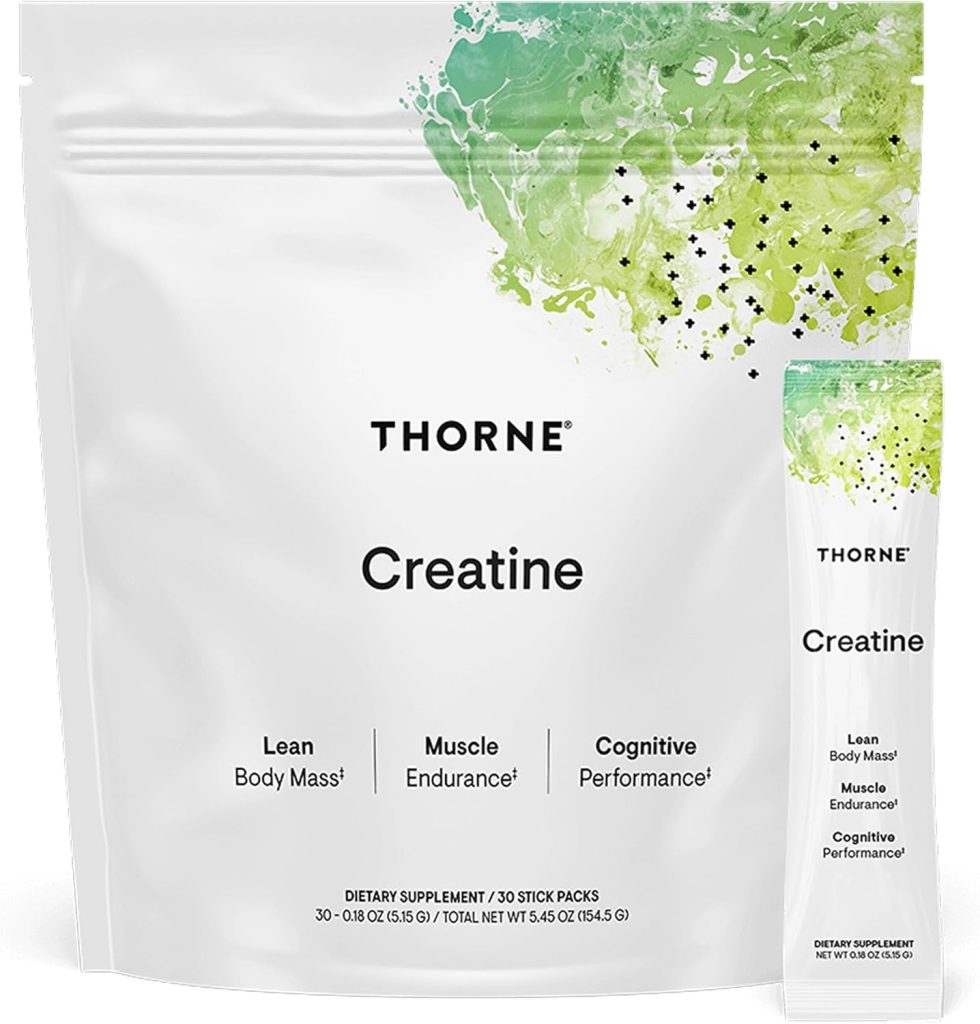
Both formats deliver the same NSF Certified for Sport® micronized creatine monohydrate. Both are HSA/FSA eligible. And both are available through the EasySave Replenishment Program, which lets you save up to 20% with automatic subscription delivery on your preferred schedule—monthly, every two months, or every three months.
Have questions about which product is right for you? Schedule a consultation with Cunningham Clinic to get personalized guidance from a trusted health care professional.
Frequently Asked Questions About Creatine
What is the recommended daily dosage for creatine?
The standard recommended dose is 3–5 grams per day, mixed with at least 8 ounces of water, juice, or a preferred beverage. This dose is supported by extensive research and is sufficient for most adults to build and maintain elevated muscle creatine stores.
What form of creatine is most effective?
Creatine monohydrate is the most studied and widely validated form. It has been shown to consistently improve strength, power, and recovery across numerous clinical trials. Other forms exist—such as creatine HCl or buffered creatine—but none have the same depth of research backing.
Is creatine safe for long-term daily use?
Yes. Creatine monohydrate has been studied extensively, and current evidence shows that long-term daily use does not harm kidney function in healthy adults. Individuals with pre-existing kidney conditions or those on related medications should consult their doctor before supplementing.
What is the best time to take creatine for maximum effectiveness?
Consistency is more important than precise timing. Many practitioners recommend taking creatine 30–90 minutes before or after exercise. On rest days, taking it at the same time each day—regardless of when—helps maintain muscle creatine saturation.
Can women take creatine safely?
Absolutely. Creatine is safe and effective for women. Research supports its benefits for lean body mass, bone health, and cognitive function, with emerging evidence showing particular advantages for post-menopausal women.
Do I need to do a loading phase?
No. While a loading phase (20g/day for 5–7 days) can saturate muscle stores more quickly, it is not required. Starting with a standard 3–5g daily dose achieves the same result over a few weeks—with fewer potential side effects like bloating.
What is NSF Certified for Sport® and why does it matter?
NSF Certified for Sport® is an independent third-party certification that tests every batch of a supplement for nearly 300 substances banned by major sports organizations including WADA and USADA. It is the only certification of its kind recognized by Major League Baseball, the NHL, and the Canadian Football League. For athletes subject to drug testing—and for anyone who wants verified product purity—this certification provides meaningful assurance.



Comments are closed