


Probiotics for Women: The Complete Guide to Gut Health

Probiotics for women support digestive health, immune function, and hormone balance by replenishing beneficial gut bacteria. Research-backed strains like Bifidobacterium lactis HN019 and Lactobacillus acidophilus offer the most consistent benefits. Multi-strain formulas with 20–30 billion CFU, delivered in acid-resistant, moisture-protected capsules, are generally the best probiotic options for women seeking comprehensive gut health support.
Your gut does far more than digest food. It regulates your immune system, produces key neurotransmitters, and—in ways that researchers are only beginning to understand fully—plays a direct role in how your body manages hormones. For women, that connection runs especially deep.
Yet gut health often gets overlooked in women’s wellness conversations, reduced to the occasional mention of yogurt or a generic probiotic picked up at the drugstore. The reality is more nuanced. Women face distinct digestive challenges throughout their lives, from hormonal fluctuations during the menstrual cycle to the significant microbiome shifts that come with perimenopause and beyond. A well-chosen probiotic supplement can make a measurable difference—but knowing which one to choose matters.
This guide breaks down everything you need to know about probiotics for women: why the female gut is unique, what the science says about probiotic benefits, how to evaluate your options, and which supplements are worth considering. Whether you’re managing bloating, supporting your immune system, or navigating a hormonal transition, you’ll find practical, evidence-based guidance here.
Why Is Gut Health Different for Women?
How hormones shape the female microbiome
The gut microbiome—the vast community of bacteria, fungi, and other microorganisms living in your digestive tract—doesn’t operate in isolation. In women, it’s closely intertwined with the endocrine system, meaning hormonal changes directly influence which bacteria thrive and which ones diminish.
One of the most important concepts here is the estrobolome: a collection of gut bacteria capable of metabolizing and regulating estrogen in the body. First defined in 2011 as “the aggregate of all enteric bacteria capable of metabolizing estrogen,” the estrobolome plays a central role in hormonal health. It produces enzymes, including β-glucuronidase, that reactivate estrogens in the gut, helping regulate menstrual cycles, support fertility, and ease hormonal transitions like perimenopause.
When the estrobolome is out of balance—a state known as dysbiosis—estrogen metabolism becomes disrupted. Excess or deficient estrogen levels can follow, with downstream effects on mood, bone density, cardiovascular health, and reproductive conditions such as endometriosis and polycystic ovary syndrome (PCOS). According to NutraIngredients (2025), researchers now describe the gut microbiome as “an overall regulator of women’s estrogen status,” particularly during and after menopause.

What gut health challenges do women commonly face?
Beyond hormones, women are disproportionately affected by certain digestive conditions. According to AboutIBS.org, approximately 60–65% of individuals who report irritable bowel syndrome (IBS) in the community are female. That’s nearly two in three IBS sufferers—a striking imbalance that reflects how deeply sex hormones influence gut motility, sensitivity, and bacterial composition.
Bloating, irregular bowel habits, and lactose intolerance are also more frequently reported by women than men. These aren’t just inconveniences—they signal an underlying microbiome that may need more targeted support than diet alone can provide. This is where high-quality supplements for gut health, specifically probiotics, become relevant.
What Are the Key Probiotic Benefits for Women?
Digestive health and regularity
The most established probiotic benefit for women is improved digestive function. Beneficial bacteria support bowel regularity, ease bloating, and help maintain the integrity of the intestinal lining—what scientists call the “gut barrier.” A stronger gut barrier means fewer harmful substances passing into the bloodstream and a more balanced internal environment overall.
Strains like Bifidobacterium lactis HN019 have been extensively studied for their ability to survive the journey through the gastrointestinal tract, adhere to intestinal epithelial cells, and support healthy bowel function. Lactobacillus acidophilus, another well-researched strain, facilitates lactose digestion and helps maintain a stable balance of organisms in the gut.
Immune system support
Roughly 70% of the immune system is housed in the gut, making microbiome health central to immune function. Probiotics support the natural immune response by encouraging beneficial bacterial populations, competing against harmful strains, and interacting with immune cells along the intestinal lining. Multi-strain formulas—those combining several complementary bacterial strains—tend to offer broader immune support than single-strain supplements, as each strain contributes distinct mechanisms of action.
Hormone balance and metabolic support
As discussed above, a well-supported estrobolome helps regulate how estrogen is processed and recycled in the body. Dr. Emily Prpa, a nutrition scientist quoted by NutraIngredients, describes the estrobolome as “a true powerhouse hormone for women,” noting that this microbial “switch” can affect many systems simultaneously. Antibiotic use, alcohol consumption, and hormonal medications can all disrupt estrobolome composition—and probiotics may help restore it.
Research cited by NutraIngredients also points to a study demonstrating that a probiotic blend helped maintain serum estrogen in healthy peri- and postmenopausal women over 12 weeks—an early but promising finding for women navigating hormonal transitions.
Nutrient absorption and short-chain fatty acid production
Probiotic bacteria contribute to metabolic processes beyond digestion. They support the production of short-chain fatty acids (SCFAs)—compounds that fuel colon cells, reduce inflammation, and support metabolic health. They also help break down certain vitamins and improve the body’s ability to absorb key nutrients. For women focused on bone density, energy, and long-term metabolic wellness, this is a meaningful downstream benefit of maintaining a healthy microbiome.
Supplements for Gut Health: How to Navigate Probiotic Options
Not all probiotics are created equal. Understanding what sets a high-quality supplement apart from a generic one is the first step toward choosing one that actually delivers results.

Single-strain vs. multi-strain formulas
Single-strain probiotics provide one specific bacterial species, which can be useful for highly targeted needs. Multi-strain formulas, however, combine several complementary species—often from both the Lactobacillus and Bifidobacterium families—to support broader microbiome diversity. For most women seeking general gut health support, a multi-strain formula is the more comprehensive option.
CFU counts: What do they mean?
CFU stands for “colony-forming units,” essentially a measure of the number of live, viable bacteria in each dose. Clinical research on probiotic benefits for women typically uses doses ranging from 10 billion to 30 billion CFU per serving. Higher isn’t always better—what matters most is whether the bacteria are alive, stable, and able to reach the intestines intact.
Delivery and stability
This is where many lower-quality supplements fall short. Probiotic bacteria are sensitive to heat, moisture, and oxygen. Products that don’t protect against these factors may deliver far fewer live organisms than their labels claim. Look for:
- Nitrogen-purged or individually sealed blister packs that protect each capsule from environmental exposure
- Acid-resistant capsule technology that allows live organisms to survive stomach acid and reach the small intestine
- Shelf-stable formulations that don’t require refrigeration but maintain verified potency
Formulation transparency
The best supplements for gut health are formulated to exclude common allergens and additives. Look for probiotic options that are vegetarian, dairy-free, gluten-free, soy-free, and non-GMO. These characteristics aren’t just about dietary preference—they reflect a cleaner formulation with fewer variables that could interfere with results.
What Makes the Best Probiotic for Women?
The best probiotic for women combines researched strains, adequate CFU count, superior delivery technology, and a clean formulation. Beyond that, the specific product you choose should align with your health priorities—whether that’s digestive regularity, immune support, hormone balance, or all three.
Key strains backed by research
- Bifidobacterium lactis** HN019®** – One of the most extensively studied probiotic strains, HN019 has demonstrated an ability to survive GI transit, adhere to epithelial cells, support bowel regularity, and reinforce immune function. It’s considered a gold-standard strain in clinical research.
- Lactobacillus acidophilus** (La-14)** – A natural inhabitant of the human intestinal tract and vagina, L. acidophilus shows excellent adhesion to epithelial cells, supports lactose digestion, and helps maintain microbial balance.
- Lactobacillus plantarum** (Lp-115)** – Found naturally in fermented foods like sauerkraut and olives, L. plantarum resists low pH environments and bile salts, making it well-suited for intestinal survival.
- Bifidobacterium longum** (Bl-05)** – Well-accepted as safe for human consumption, B. longum is resistant to low pH and bile salts and supports the intestinal environment.
- Lactobacillus paracasei – Found in the HOWARU Restore® blend, this strain is particularly noted for gastrointestinal support during periods of stress, travel, and antibiotic use.
How to Get the Most Out of Your Probiotic
Timing and consistency
Take your probiotic at the same time each day. Many women find it easiest to pair it with breakfast, though either morning or evening use is acceptable. Consistency is the most important factor—sporadic use limits the ability of beneficial bacteria to establish stable populations in the gut.
Pair with a fiber-rich diet
Dietary fiber acts as a prebiotic, feeding the beneficial bacteria introduced by your probiotic supplement. Focus on foods like vegetables, legumes, whole grains, and fruit to create an environment where probiotics can thrive. High-fiber diets have also been shown to support beneficial estrobolome bacteria, reinforcing the hormonal benefits discussed earlier.
How long before you notice results?
Timeline varies depending on what you’re taking probiotics for. Digestive improvements—less bloating, more regular bowel movements—may be noticed within a few days to a few weeks of starting. Immune and hormonal benefits tend to emerge over a longer period, often several weeks to a few months of consistent use. Clinical studies generally observe measurable effects within four to eight weeks.
What can disrupt your progress?
Several factors can undermine probiotic effectiveness:
- Antibiotic use (necessary when prescribed, but may require a higher-dose replenishment protocol)
- High alcohol consumption
- High-sugar, low-fiber diets
- Chronic stress
- Hormonal contraceptives or medications that alter microbiome composition
If any of these apply to you, discuss appropriate supplementation strategies with your healthcare provider.
Making the Right Investment in Your Gut Health
The relationship between gut health and overall wellness in women is not a passing trend in nutrition science. It’s a well-documented, rapidly expanding field of research with real clinical implications—for digestion, immunity, hormonal balance, and long-term wellbeing.
Choosing a high-quality probiotic tailored to women’s needs is one of the most impactful steps you can take for your health. The key is selecting a formula that combines researched strains, adequate CFU count, effective delivery technology, and a clean formulation—not just the first option on the shelf.

Featured Probiotic Solutions at Cunningham Clinic
XYMOGEN ProbioMax Daily 30B

ProbioMax Daily 30B is a vegetarian, four-strain probiotic formula delivering 30 billion CFU per capsule. Each capsule is individually sealed in nitrogen-purged aluminum blister packs, protecting against heat, moisture, and oxygen—three of the most common factors that compromise probiotic stability and potency.
Key strains included:
- Bifidobacterium lactis HN019® (HOWARU®)
- Lactobacillus acidophilus La-14
- Lactobacillus plantarum Lp-115
- Bifidobacterium longum Bl-05
Core benefits:
- Supports a balanced intestinal microbiome
- Promotes bowel regularity
- Supports the natural immune response
- Facilitates lactose digestion
- Promotes intestinal epithelial cell survival
ProbioMax Daily 30B is formulated to exclude dairy, gluten, soy, wheat, eggs, tree nuts, shellfish, peanuts, fish, and GMO ingredients—making it a clean, accessible option for women with multiple dietary considerations. One verified purchaser noted: “Good probiotic, no bloating or discomfort starting it, which I appreciated. Take it once a day with breakfast. Digestion has been steadier since I started.”
Best for: Women seeking a high-potency, multi-strain daily probiotic with clean formulation and maximum stability protection. Especially well-suited for those prioritizing immune and digestive health alongside hormone balance.
Biote Multi-Strain Probiotic 20B
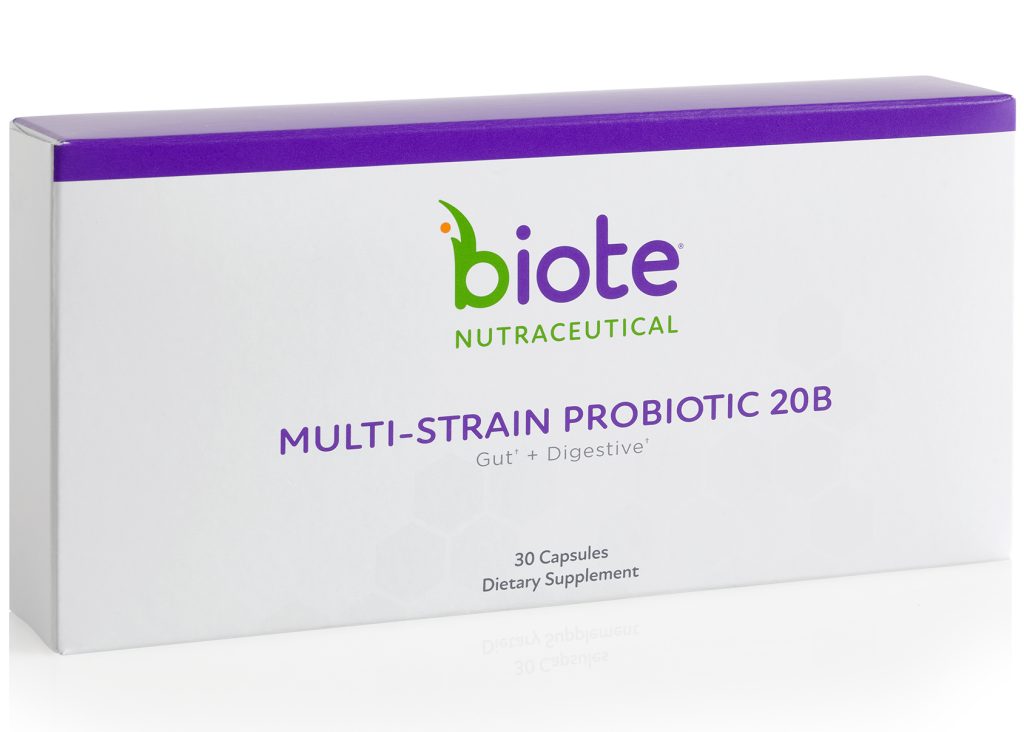
Biote Multi-Strain Probiotic 20B delivers 20 billion CFU per capsule through a clinically studied HOWARU Restore® blend of freeze-dried Lactobacillus and Bifidobacterium strains. Like ProbioMax, each capsule is individually sealed in blister packs to preserve potency against humidity and temperature changes.
Key strains included:
- Lactobacillus paracasei
- Lactobacillus acidophilus
- Two strains of Bifidobacterium lactis
Core benefits:
- Eases occasional bloating
- Supports bowel regularity
- Strengthens the gut–immune axis
- Rebalances the microbiome after disruption (including antibiotic use)
- Designed to complement bioidentical hormone replacement therapy (BHRT)
This formula is particularly thoughtful for women undergoing hormonal therapy. Its compatibility with BHRT makes it a natural complement to Cunningham Clinic’s broader wellness approach. Rated 4.86 out of 5 based on verified customer reviews, users report meaningful improvements in digestive comfort, regularity, and even hormonal health. One verified buyer shared: “The improvement in my hormonal health has been remarkable.” Another with a challenging GI condition called it “a game changer”—reporting no diarrhea episodes in the three weeks following consistent use.
Best for: Women who are actively undergoing bioidentical hormone replacement therapy, those recovering from antibiotic use, or anyone dealing with frequent bloating and irregular digestion who wants a well-rounded, clinically studied multi-strain formula.
Choosing between the two
Both products feature overlapping strain families and superior delivery technology. The primary differences come down to CFU count, formulation breadth, and intended context:
- Choose ProbioMax Daily 30B if you want a higher potency (30B CFU), strictly allergen-free formula with four distinct, research-backed strains—especially if clean labeling is a priority.
- Choose Biote Multi-Strain Probiotic 20B if you’re complementing BHRT, managing post-antibiotic recovery, or looking for a well-reviewed daily option designed with hormonal health in mind.
When in doubt, consulting a healthcare provider—such as the team at Cunningham Clinic—can help you identify which formula aligns best with your current health goals.
Both ProbioMax Daily 30B and Biote Multi-Strain Probiotic 20B meet that standard. Both are available through the Cunningham Clinic store, where you’ll also find personalized guidance to help match the right supplement to your specific health goals. Browse the full Cunningham Clinic supplement store to explore your options.
As Dr. Prpa of NutraIngredients put it: “Care for your gut, and you’re caring for your hormones.” That’s a principle worth putting into practice.
Frequently Asked Questions About Probiotics for Women
What are the most important probiotic strains for women’s health?
The most researched probiotic strains for women include Bifidobacterium lactis HN019, Lactobacillus acidophilus, Lactobacillus plantarum, Bifidobacterium longum, and Lactobacillus paracasei. These strains have demonstrated benefits for digestive regularity, immune function, and intestinal barrier integrity. Multi-strain formulas that combine several of these species tend to offer broader support than single-strain options.
How many CFU should a probiotic for women have?
Most clinical research on probiotic benefits for women uses doses between 10 billion and 30 billion CFU. For general daily support, 20–30 billion CFU is a well-supported range. Higher CFU counts may be beneficial in specific contexts—such as post-antibiotic recovery—but a stable, protected 20–30 billion CFU formula consistently taken will outperform a poorly stored, high-CFU product.
Can probiotics help with menopause symptoms?
Emerging research suggests probiotics may support hormonal balance through the estrobolome—the group of gut bacteria responsible for metabolizing estrogen. A disrupted estrobolome has been linked to hormonal imbalance and conditions like hot flashes, mood changes, and bone density loss. One study cited by NutraIngredients found that a probiotic blend helped maintain serum estrogen levels in peri- and postmenopausal women over 12 weeks. More large-scale human research is still needed, but current evidence is encouraging.
Are there probiotics designed to work alongside hormone therapy?
Yes. The Biote Multi-Strain Probiotic 20B is specifically formulated to complement bioidentical hormone replacement therapy (BHRT). Its HOWARU Restore® blend of Lactobacillus and Bifidobacterium strains supports microbiome balance in the context of hormonal optimization, making it a practical pairing for women undergoing BHRT at clinics like Cunningham Clinic.
How long does it take for probiotics to work for women?
Most women notice digestive improvements—such as reduced bloating and more regular bowel movements—within a few days to a few weeks. Broader benefits related to immune function and hormonal support typically develop over four to eight weeks of consistent, daily use. Consistency is the most critical factor; missing doses frequently limits the bacteria’s ability to establish and maintain populations in the gut.
What should women look for when choosing a gut health supplement?
Look for a probiotic supplement that includes researched strains (particularly B. lactis HN019 and L. acidophilus), delivers 20–30 billion CFU per dose, and uses protective packaging such as nitrogen-purged blister packs or acid-resistant capsules. A clean formulation—free of dairy, gluten, soy, and unnecessary additives—is also important. Third-party testing and transparent labeling are additional quality indicators worth prioritizing.



Comments are closed