


How do Peptides Work?
Peptides are clearly becoming more and more prominent in skin-care products. You have probably heard about them or seen them on products in the store and wondered if they worth the buzz. Let’s take a look at everything you need to know about what they are and what they are used for. But the short answer is yes, they are worth the buzz!

What are Peptides?
Peptides are naturally occurring biological molecules and are found in all living organisms. They occur naturally in our skin and act as our body’s biological messengers. We need peptides for our body to function correctly. Peptides are short chains of amino acids (these are the smallest units of a protein), and they act as the building blocks of proteins. The amino acids in a peptide are connected in a sequence by bonds called peptide bonds. Peptides act as messengers, signaling to your skin that it’s time to start building proteins (like collagen, elastin, and keratin). Since peptides are not proteins in and of themselves, they can penetrate the skin when they are applied topically, whereas proteins themselves (like collagen) couldn’t penetrate the skin, which is why you often see collagen supplements and not topical collagen products. Once applied topically, they’re used biologically within your skin to build up proteins!
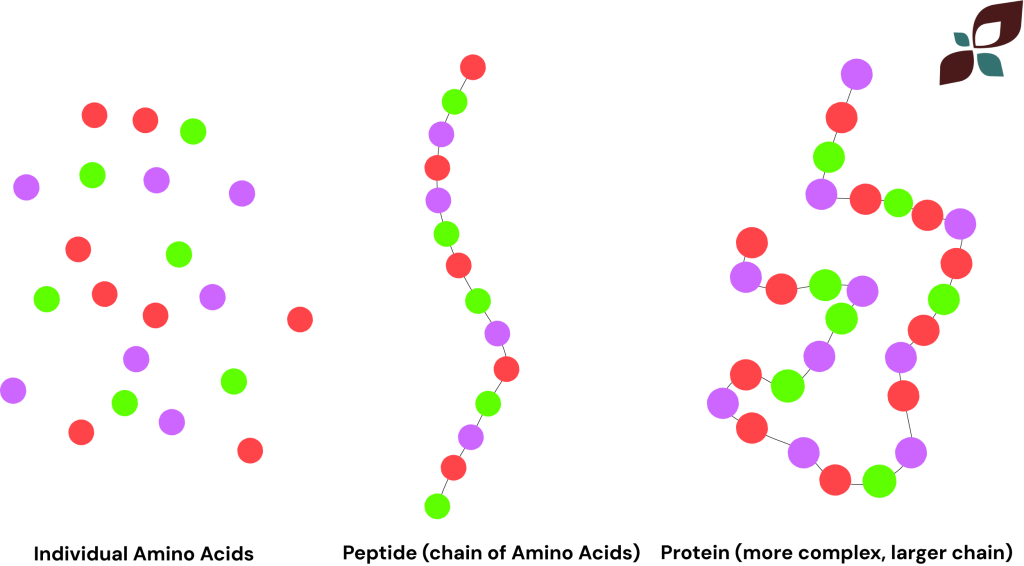
As we age, the peptide bonds in our skin weaken, reducing its firmness and elasticity and decreasing protein levels. This is why we add peptides even though they are already present in our skin. Peptides are powerful anti-aging skincare ingredients that reinforce essential skin proteins like collagen and elastin by signaling your skin to build them. These key proteins support your skin’s texture, resilience, and strength. Peptides have been shown to support your skin in many ways, including firmness, hydration, and soothing.
Are there different kinds of peptides?
Four main peptide categories exist: signal, carrier, enzyme inhibitor, and neurotransmitter. Each works differently when used. Signal peptides signal your skin to generate elastin and collagen. Carrier peptides help with mineral delivery. Enzyme inhibitor peptides help reduce collagen breakdown. Neurotransmitter peptides help with fine lines and wrinkles.
Signal and carrier peptides are often the most popular and are more widely researched than enzyme inhibitor and neurotransmitter peptides. Examples of signal peptides include palmitoyl tripeptides, tetrapeptides, carnosine, and hexapeptides. A common carrier peptide is a copper peptide (GHK-Cu). You can look for these in the ingredients of your skin-care products to see what kinds of peptides they include.
What are the benefits to using peptides in my skin-care routine?
As we start aging, our collagen and protein production decreases significantly, which is where peptides come in. When used, peptides signal your skin to produce those proteins and rebuild. They are proven to help reduce the appearance of fine lines and wrinkles, boost your skin’s firmness and plumpness, create more elastic skin, ease inflammation, and even help with breakouts.
How do I use peptides?
It’s best to use peptide products as serums or moisturizers, so they stay on your skin, rather than as a cleanser that washes off. Use them after cleansing and before moisturizing. Test your other products to see whether you react to using them alongside the peptides; if you do, find a different formula that works for your skin.
Peptides are essential in the fight against aging skin!
These are some of our favorite peptide products that can easily be added into any skin-care routine:
Neck Correct Cream is a powerful serum that is uniquely formulated to prevent and address the multiple visible signs of moderate to severe neck aging. It is a state-of-the-art, luxurious formula of peptides, antioxidants, and active botanical extracts uniquely designed to target the biological pathways specific to neck aging.
SkinMedica TNS Ceramide Treatment Cream
TNS Ceramide Treatment Cream hydrates and helps restore your skin’s barrier function through Palmitoyl oligopeptide and tetrapeptide-7 that regulate cell functionality and stimulate collagen production to reduce the appearance of fine lines and wrinkles.
Quicksilver Scientific Facial Beauty Serum
Quicksilver Scientific Facial Beauty Serum is an advanced nanoemulsified anti-aging serum created specifically for estrogen-deficient skin during perimenopause and menopause. Combining bioidentical estriol, estradiol, GHK-Cu copper peptide, hyaluronic acid, bakuchiol, and highly penetrable vitamin C, it helps restore firmness, hydration, elasticity, and radiance for healthier, younger-looking skin.
Revision D·E·J Face Cream targets the skin’s longevity layer to visibly firm, plump, and smooth lines—especially when skin starts to look thinner, looser, or less radiant. If you want more than hydration (real density, bounce, and glow), this microbiome-friendly, skin-neutral formula is built to make your skin look younger-acting over time.
Peptides can also be used in other products besides skin-care- take a look at these two peptide products that work to reduce hair loss!
BioTE Hair Rescue: ACTIVATE is a peptide hair growth complex that works to stimulate normal hair growth and promote hair cell proliferation. It combines a hair-stimulating peptide, PTD-DBM, with Methyl Vannilate to provide a multi-approach solution to hair loss.
BioTE Hair Rescue: REPAIR is a hair follicle peptide serum that combines two potent peptide combinations, GHK-Cu and AN-Thymulin to strengthen existing hair and extend the anagen stage of hair follicles.



Comments are closed